
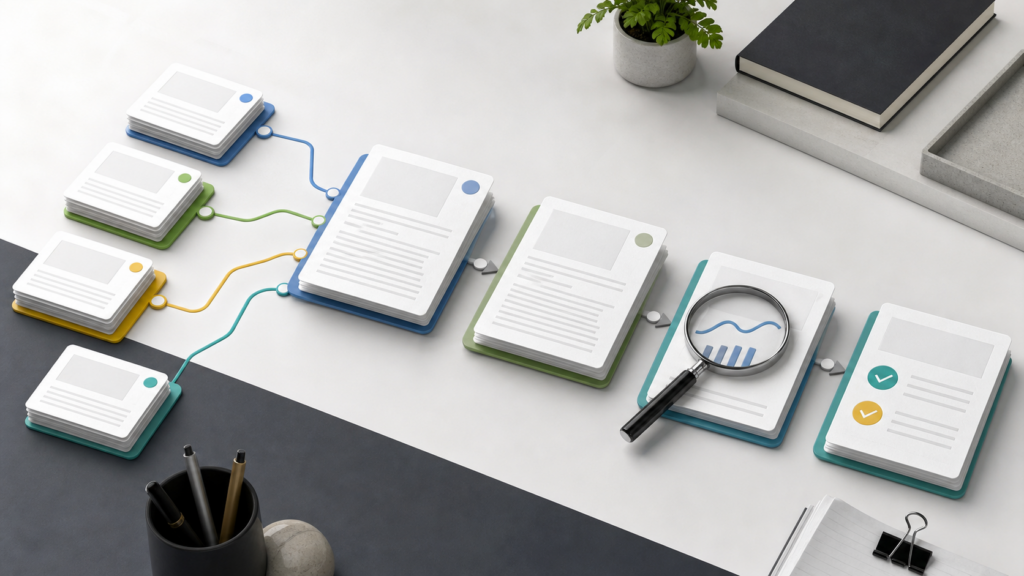
WP Tavern’s May 20, 2026 Jukebox episode with Leonardo Losoviz is easy to read as a plugin story. It is sharper if you read it as a workflow warning. Losoviz explains how Gato AI Translations for Polylang uses AI to translate WordPress content while relying on Polylang for language relationships. The headline benefit is obvious: translation gets cheaper and faster. The operational consequence is less obvious: teams now have fewer excuses for staying monolingual and fewer places to hide weak editorial processes.
His most useful line is blunt: “as long as you can do it, do it.” For WordPress operators, agency founders, SEO editors, and product-led content teams, that does not mean translating everything blindly. It means treating multilingual publishing as a normal content operation, not a special project that only happens after a budget exception.
The Bottleneck Moved
In older multilingual projects, the bottleneck was often the translation bill. You had to identify every string, hire translators, manage files or plugin screens, wait for the work, and then publish language variants. Losoviz argues that AI has changed that calculation. Translation itself can now be fast and cheap enough that the larger cost is no longer typing the target-language text. It is deciding what deserves translation, preparing the source content, and checking the output.
That is why the affordability story should not be mistaken for an automation story. Gato’s own March 2026 v17.1 release post added self-hosted LLM support, reinforcing a broader trend: token cost is becoming tunable. But cheaper generation still multiplies whatever you feed it. A vague headline, broken internal link, outdated screenshot, or image with embedded English text becomes a multilingual cleanup job.
The practical move is to shift quality control earlier. Before translation, freeze the source post, settle the slug, confirm headings, audit images, and decide which terms should remain untranslated. Translation is no longer the last expensive gate. It is a multiplier applied to your editorial discipline.

SEO Value Depends on Structure
Multilingual content only helps search if each language version is discoverable, correctly connected, and useful for users in that language. That is where architecture matters more than output volume. The Polylang plugin page describes a model built around WordPress posts, pages, media, taxonomies, URL language codes, subdomains, or domains per language. In the WP Tavern interview, Losoviz favors this static-entry approach because each translated post can behave like a normal WordPress page.
That matters for SEO teams because localized versions need clear relationships. Google’s documentation on localized versions and hreflang recommends explicitly indicating language or regional variants and notes that alternate URLs should be fully qualified and bidirectional. In plain terms, translation is not enough. The source, Spanish, French, and German pages must be mapped in a way search engines can understand.
This is the part many AI translation pitches understate. A multilingual SEO workflow needs translated titles and descriptions, correct internal links, language-aware category and tag structures, and QA for indexable templates. If those pieces are missing, AI gives you more pages, not necessarily better international visibility.
Human Review Gets Narrower and More Important
Losoviz is not arguing that human review disappears. He is arguing that the review job changes. Instead of paying a translator to produce every sentence from scratch, a team can use AI for the first pass and reserve human attention for ambiguity, technical terms, regulated claims, brand language, and cultural fit. That is a better use of expert time, but only if the review scope is explicit.
The Gato multilingual guide makes the same operational point from another angle: audit the origin content first, then validate links, images, formatting, metadata, blocks, and SEO fields. This is not busywork. It is how teams prevent a five-language launch from becoming five versions of the same preventable defect.
For agencies, the client-facing implication is clear. AI translation should be sold with a review model, not as magic. A low-risk blog post may only need spot checks and glossary enforcement. A healthcare, legal, finance, or technical product page needs expert review before publishing. The savings come from shrinking the human workload, not pretending judgment is optional.

What AI Ghostwriting Teams Should Change
For teams using WP Post AI to plan, draft, and optimize WordPress content with AI agents, the lesson starts before the translation step. The canonical post has to be good enough to clone into other markets. That means the brief should capture target countries, locked terminology, examples that may not travel, required compliance language, preferred slugs, and whether images can work without embedded text.
The second change is prioritization. Not every post deserves every language. Product-led content teams should start with pages that already show durable search intent, sales value, or support value in the source language. Then they can expand into languages where the audience, offer, and support capacity make sense. Cheap translation lowers the threshold, but it does not remove the need for market judgment.
The third change is measurement. A translated post should enter the same editorial loop as any other SEO asset: indexation checks, Search Console monitoring, internal link review, conversion tracking, and refresh planning. If an origin post is updated later, the translation workflow needs a policy for partial updates, retranslation, and review. Otherwise, the multilingual site quietly drifts out of sync.
The Roadmap Is Directional, Not a Reason to Wait
The WP Tavern conversation also touches on WordPress collaboration and future AI-assisted review inside the editor. That part should be treated carefully. The official WordPress roadmap says Phase 3 is centered on collaborative editing and workflows, and the long-term Gutenberg roadmap still includes multilingual work as Phase 4. Losoviz’s idea of AI leaving comments or uncertainty notes in an editor workflow is plausible, but it is not a publishing plan by itself.
The better conclusion is more practical: build around today’s plugins, today’s review process, and today’s SEO rules, while expecting the WordPress editor to become more collaborative. Waiting for core multilingual features is not necessary if your content operation is ready now.
The Practical Takeaway
Affordable AI translation changes the default question from “Can we afford another language?” to “Is this content ready to represent us in another language?” That is a higher bar, not a lower one. The winners will not be the teams that translate the most pages. They will be the teams that translate the cleanest source content, connect it properly, and review the parts where accuracy still matters.
Translation workflows also need source custody. The source-grounded WordPress workflow shows how evidence can remain attached from brief through editorial review.
Discussion
Join the discussion
Useful notes, corrections, and field experience belong here. Keep replies specific and constructive.